
Drive aisle polishing
Every vehicle on the property uses the same aisles, so they see many times the passes a stall does. The surface there polishes and loses its texture first, and it is usually the part a board notices.
Serving Las Vegas, Nevada & surrounding areas
Mon–Fri 8am–6pm · Sat 9am–2pm
Sealcoating · Spring Valley
On shared pavement the hard part is not the sealer, it is the logistics. Residents have to park somewhere, and a community with one entrance cannot have it closed on a whim.
Access is the constraint
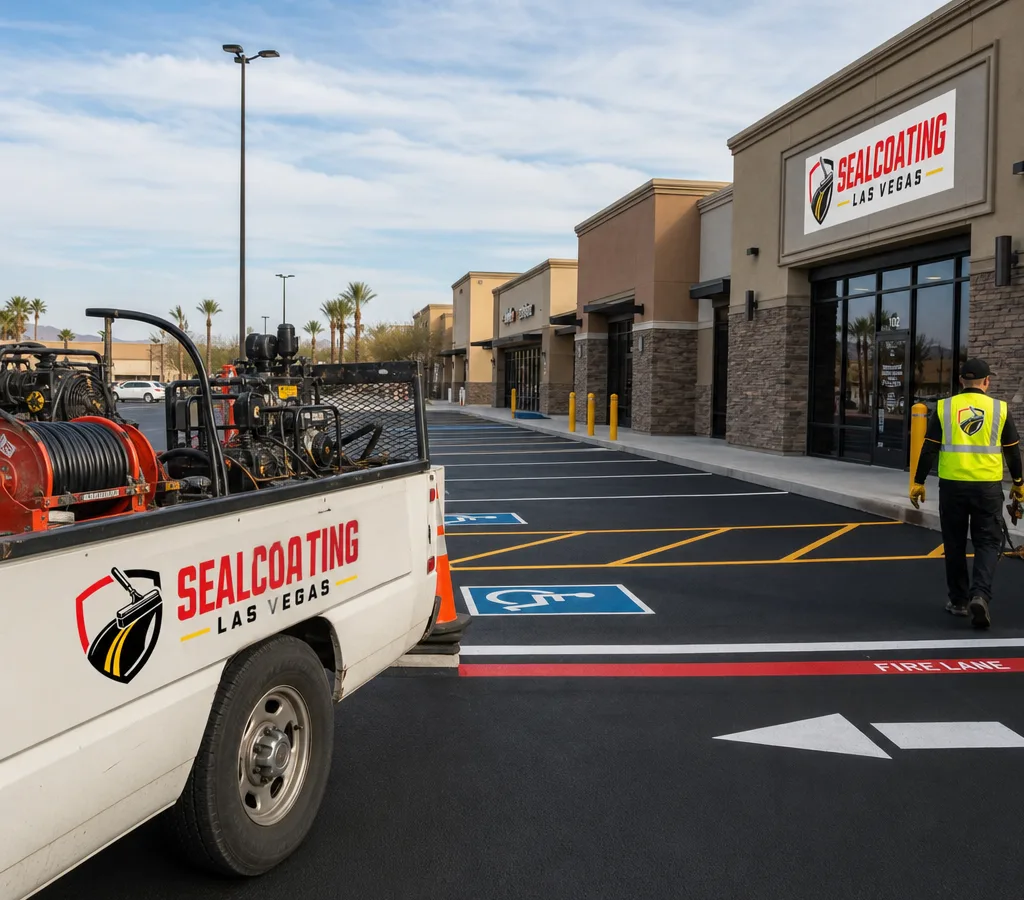
Spring Valley carries a lot of managed housing: condominium courts, apartment complexes, townhome communities with private drives and HOA-maintained parking. Technically the pavement is ordinary. What makes these jobs different is that every square foot of it is somebody's only route home. A seal plan for shared pavement starts from the access map, not the surface. Which sections can close at once, where displaced cars go while a section cures, whether there is a second entrance, how emergency access is maintained throughout, and what notice residents need before the day.
Get that wrong and the work stalls halfway through with cars parked on uncured sealer, which is worse than not starting. Sealcoating Las Vegas works on community and multifamily pavement across Spring Valley, and the written scope for these jobs includes the phasing plan, not just the materials.
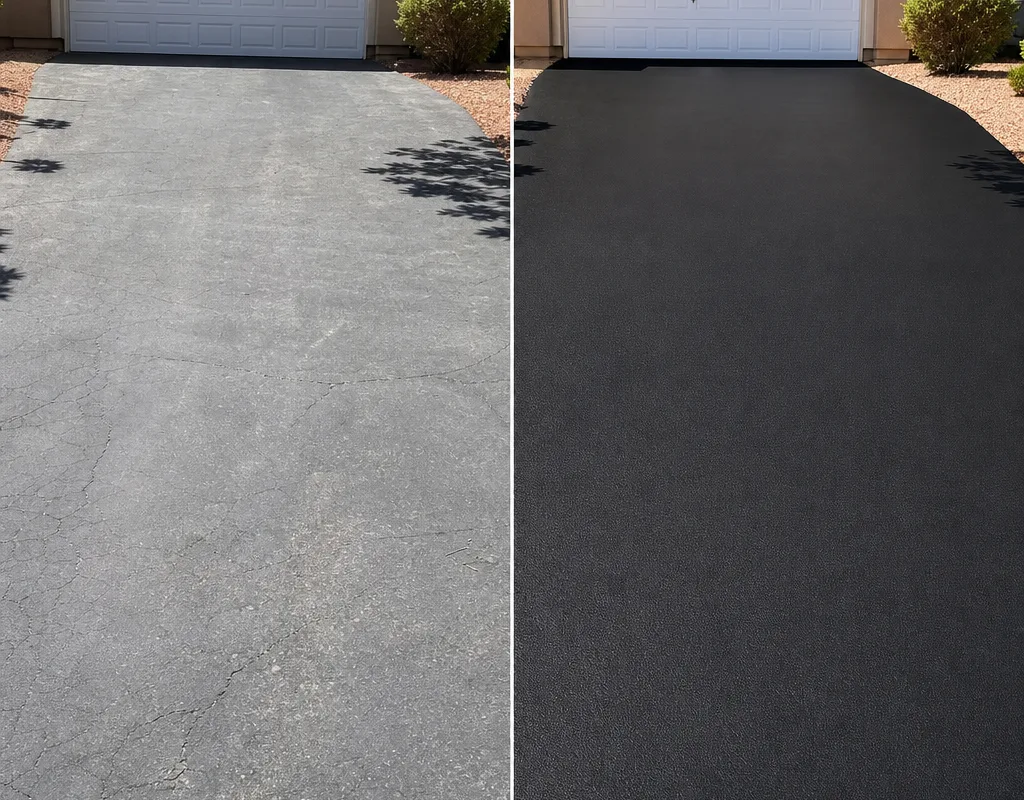
Sealcoat protects the surface and improves how the property looks, both of which matter to a board. It does not carry load or repair a failing base, and where a drive aisle is showing structural trouble we say so rather than coating it and letting the next board discover it.
The phasing plan
Alongside the pavement work, these are the parts that make a shared-access job actually run:
Anything we judge structural, or anything carrying a liability dimension such as a lifted edge beside a walkway, goes in the written report for the board rather than being quietly coated over.
What shared use does
Five patterns specific to shared housing pavement, and what each means for scope and sequencing.
Every vehicle on the property uses the same aisles, so they see many times the passes a stall does. The surface there polishes and loses its texture first, and it is usually the part a board notices.
Where cars turn tightly around a building or into a court, the surface takes sideways scrub. These localised spots wear faster than the aisle they sit on.
Cars parked in the same stall for years leave a concentrated line of drips. Saturated spots will not bond to sealer and need prepping separately or flagging.
The heaviest vehicles on a residential property are the refuse truck and occasional deliveries, and they use one fixed route. That path often shows load distress the rest of the lot does not.
Cracking where asphalt meets a walkway or threshold matters beyond appearance on a shared property. It is worth raising with a board specifically, because it carries a liability dimension that a driveway does not.
How the work runs
We need to know the parking pressure, the quiet times, where overflow can go and which buildings have no alternative access. That conversation shapes everything that follows.
Area, crack footage and condition, then the section plan: what closes when, where cars move to, how long each section is out.
Materials and coats, crack work, and the phasing with reopening times. A board usually has to approve this at a meeting, so it is written to be read by people who were not at the walkthrough.
Each section is prepped, filled, coated and reopened on the posted schedule. We hold to the times we gave you, because residents planned their week around them.
With the manager, including anything we flagged as structural or as a trip hazard, so it is on record for the board rather than only in conversation.
Measured on site
Parking lot maintenance in Las Vegas typically runs about $0.20 to $0.60 per square foot for sealcoating with basic prep, while crack sealing often adds roughly $1.00 to $3.00 per linear foot depending on crack size and routing needs. Larger commercial lots with phased closures can price line by line. For reference, asphalt sealcoating generally ranges from about $0.20 to $0.45 per square foot, and a larger parking lot crack repair scope can run $1,000 to $6,000+ depending on total footage and access.
On community pavement the phasing is a real cost input: a property that can only release one small section at a time takes more visits than one with overflow parking and a second entrance, and the scope will say which yours is. A firm figure follows the site visit, once the section plan and crack footage are both known.
Plan around residents
The schedule on a community job is set by parking, not weather.
The practical requirements:
The last point is the one that causes most of the problems on community jobs. A surface can look finished and still mark under a tire, which is why the posted reopening time matters more here than anywhere else.
If you are presenting options to a board, the phasing plan is the part residents will judge you on. We write it to be read by people who were not at the walkthrough.
On the ground
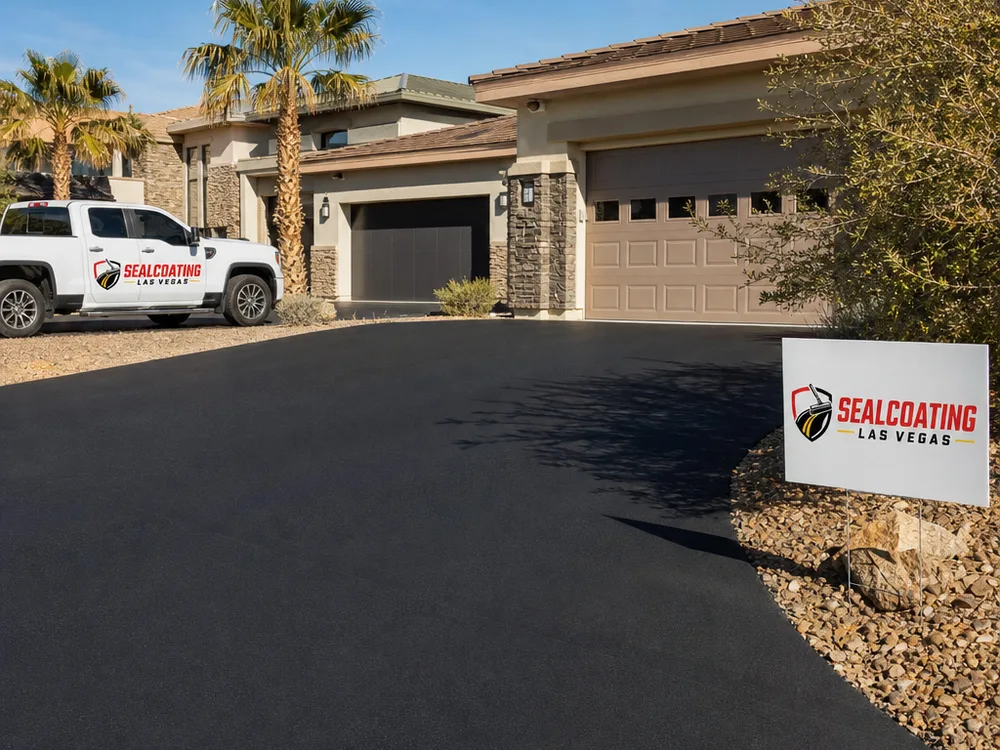
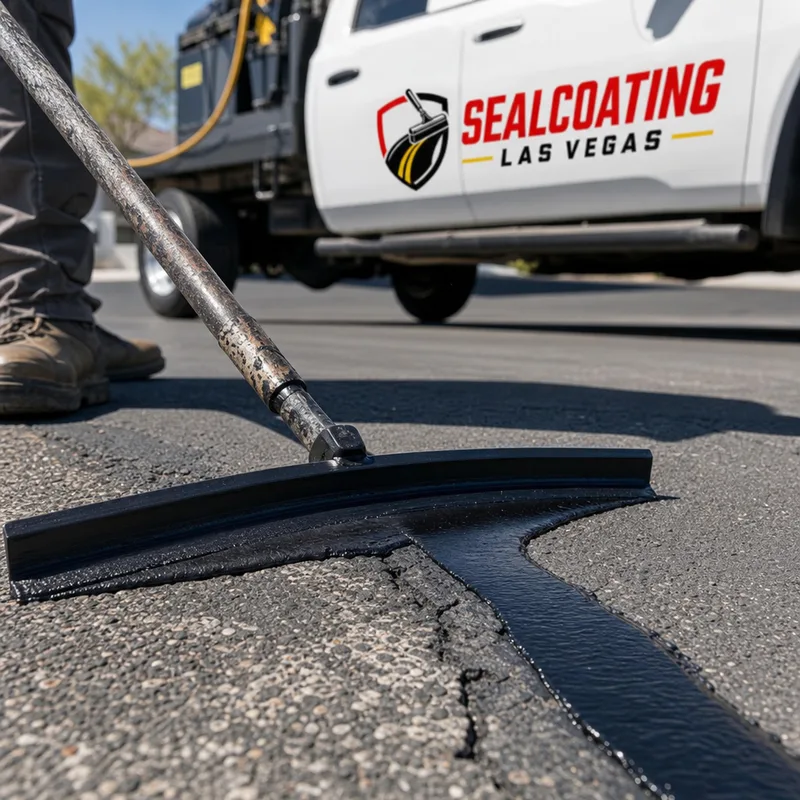
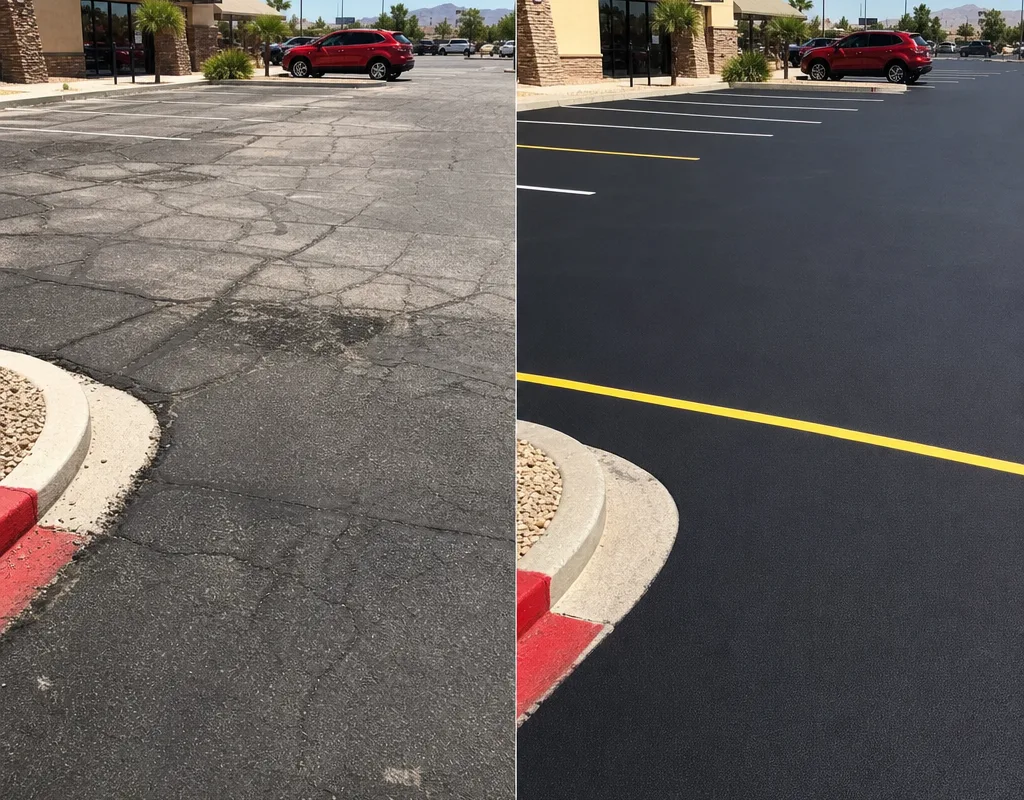
Recent lot and driveway work across the Las Vegas valley, including shared pavement sealed in phases around residents.
Common questions
What HOA boards, community managers and multifamily owners in Spring Valley ask us most often about phasing, notice and scope.
As little as the access map allows. We break the pavement into sections that can close without cutting off a building or the entrance, and we size them to the overflow parking you actually have. A property with nowhere for cars to go gets smaller sections and more visits.
More than you would think for a property under parking pressure: people need to arrange where to leave a car, and a couple of days is rarely enough. We give you the dates, sections and reopening times in a form you can post and email as-is.
Yes, and it is designed into the phasing from the start rather than worked around. No phase of the plan leaves a building unreachable.
Not usually. Aisles carry every vehicle on the property plus the turning and braking loads, so they wear differently and sometimes need a different scope. We separate them in the written plan rather than quoting the lot as one surface.
That is what the written scope is for. It covers materials, coats, crack work and the full phasing with reopening times, written so someone who was not at the walkthrough can follow it.
It marks the surface, and depending on timing it can damage the coat enough to need redoing. This is the main reason the posted reopening times are worth enforcing, and why we would rather give a conservative time than an optimistic one.
Next step
Tell us the parking situation and we will walk the property, map the sections, and put the scope and schedule in writing for your board.
Talk to our Las Vegas team
Call or send the property address and we will arrange an on-site inspection, then put the approved work in a written scope.
Request a quote
Send the property address and what you need looked at. We reply with next steps and schedule an on-site inspection before any written scope.