Base-first thinking
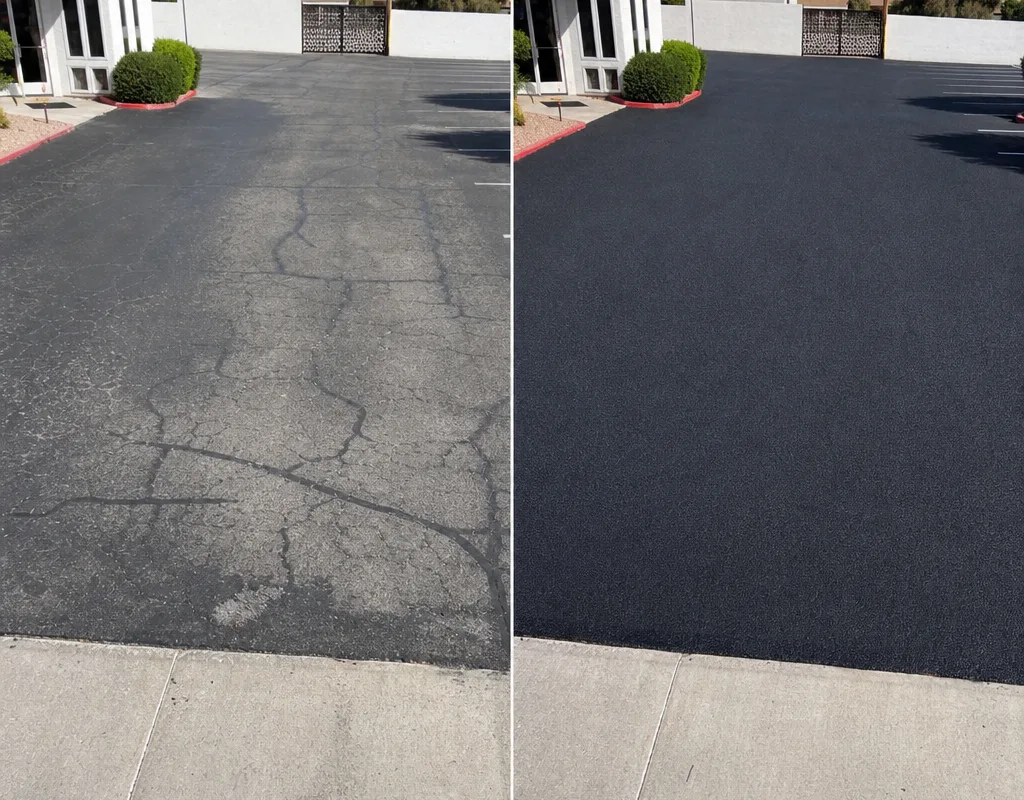
New asphalt over a failed base fails again. We look for soft areas, pumping, and fatigue cracking so repairs address the real cause, not only the symptom.
Serving Las Vegas, Nevada & surrounding areas
Mon–Fri 8am–6pm · Sat 9am–2pm
Asphalt Paving · Las Vegas
From small patches to full replacements, get a clean, durable surface built for desert heat, heavy traffic, and long-term maintenance.
Built for desert conditions
If you are searching for asphalt paving las vegas, you are usually trying to solve one of three problems: a surface that is failing, a property that needs a better first impression, or a lot that has to meet day-to-day traffic demands. Sealcoating Las Vegas handles the full paving scope, with practical recommendations based on what is actually happening in your asphalt.
Las Vegas pavement takes a beating. Summer heat softens asphalt, traffic pushes it out of shape, and UV exposure dries the binder so the surface oxidizes faster. On top of that, monsoon storms can move a lot of water quickly and exploit weak seams, low spots, and existing cracks. The right fix depends on the base condition, drainage, and how the area is used.
When the base is stable, targeted repairs and an overlay can restore ride quality and appearance. When the base has failed, replacing sections—or the full area—is the only fix that lasts. If you are also planning ongoing protection after the paving work, our asphalt sealcoating work is often scheduled after the new surface has cured, so the finished project stays darker and resists oxidation longer.
Property-specific planning
Asphalt paving in Las Vegas, Nevada covers a wide range of properties, and the right plan starts with a walk-through and measurements. We commonly pave:
A good scope answers a few jobsite questions up front. Where is the water supposed to go, and where is it actually going today? Are there low areas that will hold water after paving? Is the distress surface-deep—oxidation, raveling, or minor cracking—or does it indicate base failure such as widespread alligator cracking, pumping, and soft spots?
We also talk through traffic patterns. Turning movements at a shopping center entrance do different damage than a lightly used office lot. That changes how repairs, edges, and high-stress areas are detailed.
For downtown properties near our office at 920 S Commerce St, Suite 4, access planning matters. Deliveries, one-way lanes, and tight entrances can affect staging and phasing, so we build them into the plan.
Quality from the ground up
New asphalt over a failed base fails again. We look for soft areas, pumping, and fatigue cracking so repairs address the real cause, not only the symptom.
Low spots and poor transitions create ponding that accelerates cracking. We plan grades and tie-ins so water moves where it should.
Proper lift thickness and rolling matter as much as the mix itself. Compaction is where durability is earned, especially in hot weather.
Bad joints are common failure points. We pay attention to longitudinal joints, butt joints at tie-ins, and edges that need support.
Lots often need to stay partially open. We can phase work so access stays workable while the surface is rebuilt.
You get a written scope that spells out prep, repair areas, thickness assumptions, and what is excluded so decisions are straightforward.
From assessment to reopening
We measure the area, note drainage paths, and identify failure zones like rutting, edge breakup, and alligator cracking. For properties near busier corridors such as around Summerlin or Spring Valley, we also account for turning stress and frequent braking.
Prep can include sawcutting and removing failed asphalt, excavating soft base, and reworking subgrade. This is also where we correct problem transitions and set up proper edges.
We rebuild the base in failed areas and compact it in lifts. Getting the base right keeps the surface from settling, cracking, or holding water after the first season.
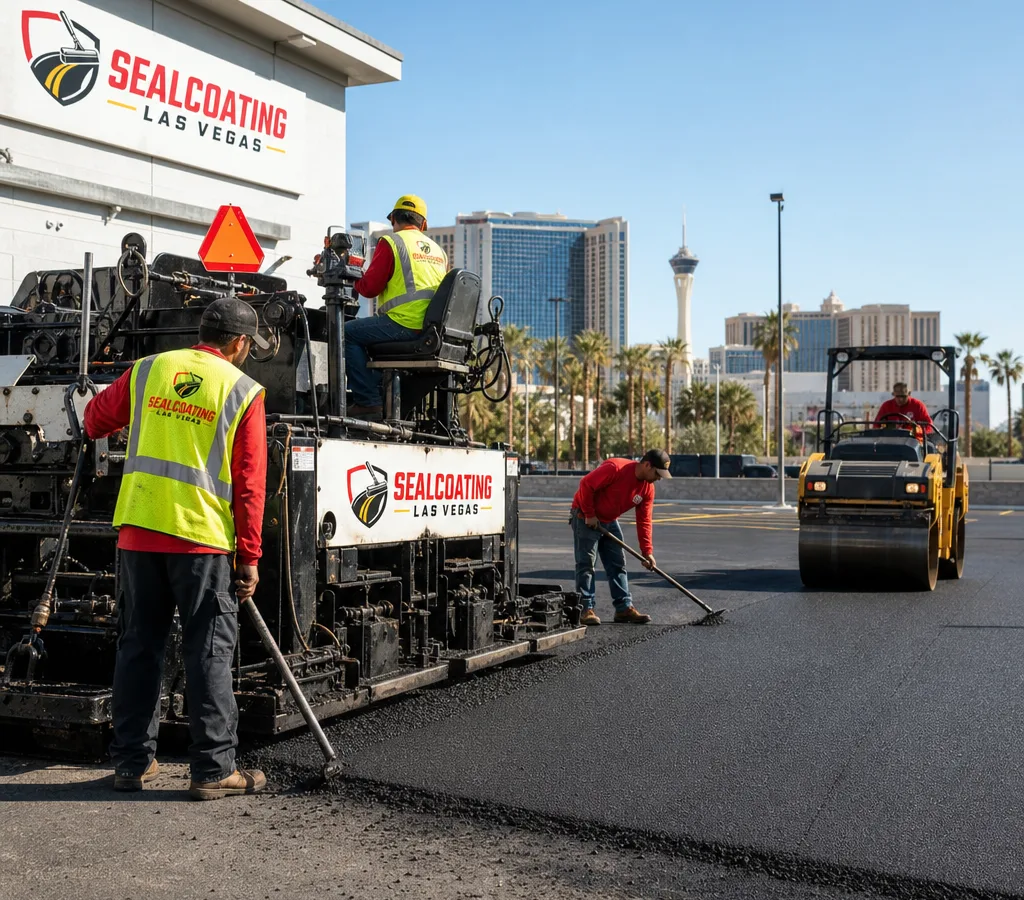
We apply tack coat at interfaces, place hot-mix asphalt at the planned thickness, then compact with steel and pneumatic rolling as conditions require. Timing matters in Las Vegas heat, and we manage rolling patterns so the mat locks in before it cools.
We handle clean edges, transitions, and any required layout coordination. Then we outline cure time, traffic return expectations, and how to maintain the surface.
Measured on site
Asphalt paving in Las Vegas typically ranges from about $4 to $12+ per square foot depending on thickness, site access, and how much base repair is required. A small residential driveway is often at the lower end when prep is minimal, while commercial lots with demolition, grading, and high-stress repair areas can price higher.
Final price changes most with square footage, removal depth, base condition, drainage corrections, edge support, and how the work must be phased to keep access open. The exact cost is confirmed after an onsite evaluation and measured scope.
Straight answers
If the cracking is widespread and looks like a web (alligator cracking) or you have soft spots and depressions that return after patching, you usually need base repair or replacement, not just a surface fix. An overlay can work when the base is stable and cracking is limited, but it still needs proper prep, leveling, and joint work to avoid reflective cracking. A short site visit can confirm whether the failures are structural or surface-deep.
Most paving is scheduled when temperatures support good compaction and cure behavior, which is often easier outside the coldest weeks and during stable weather windows. Las Vegas summer heat can be workable for paving, but it increases the importance of timing, trucking, and rolling so the mat compacts correctly before it cools unevenly. We also plan around monsoon storms because sudden heavy rain can disrupt prep and base work.
Many paved areas can take light vehicle traffic within about 24 to 48 hours, but full curing takes longer and heavy loads can scuff or mark the surface sooner. The exact timeline depends on thickness, ambient temperature, and traffic type, especially for high-turn areas like entrances and dumpster pads. We provide specific reopen guidance based on your layout and usage.
Yes, phased paving is common for Las Vegas retail and multi-tenant properties where access cannot shut down completely. The scope is divided into sections with defined traffic control, cure time, and re-striping coordination so customers and deliveries can keep moving. Phasing can affect cost and schedule, but it often reduces disruption.
Strong sun and heat speed up oxidation, which dries the asphalt binder and makes the surface more brittle over time. Once the surface gets brittle, small cracks open faster and water can reach the base through seams and joints. Good paving prep, tight joints, and a maintenance plan after curing help slow this down.
Plan to clear vehicles, trailers, and movable items from the work area and identify any access constraints like gates, loading times, or tenant deliveries. For commercial properties, having a point person available helps with traffic flow and staging decisions. If irrigation is near pavement edges, mark it so prep work does not disturb lines or heads.
If your surface is cracking, rutted, or holding water, get a measured scope and a plan that fits your traffic patterns and schedule before you commit to a fix.
Call for a Free EstimatePlan your paving project
Tell us what you are paving, how the area is used, and what problems you are seeing. We will review the site conditions and provide a clear, written plan for your Las Vegas asphalt project.
Talk to our Las Vegas team
Call or send the property address and we will arrange an on-site inspection, then put the approved work in a written scope.
Request a quote
Send the property address and what you need looked at. We reply with next steps and schedule an on-site inspection before any written scope.