
Cure-out period
Fresh asphalt releases lighter oils for a while after it is laid. A coat applied into that is working against a surface still giving off material, and the bond suffers for it.
Serving Las Vegas, Nevada & surrounding areas
Mon–Fri 8am–6pm · Sat 9am–2pm
Sealcoating · Enterprise
Much of the asphalt in Enterprise is relatively young. That is the best position to be in, and it comes with one question most owners get wrong in both directions: when is the first seal actually due?
Protecting sound pavement
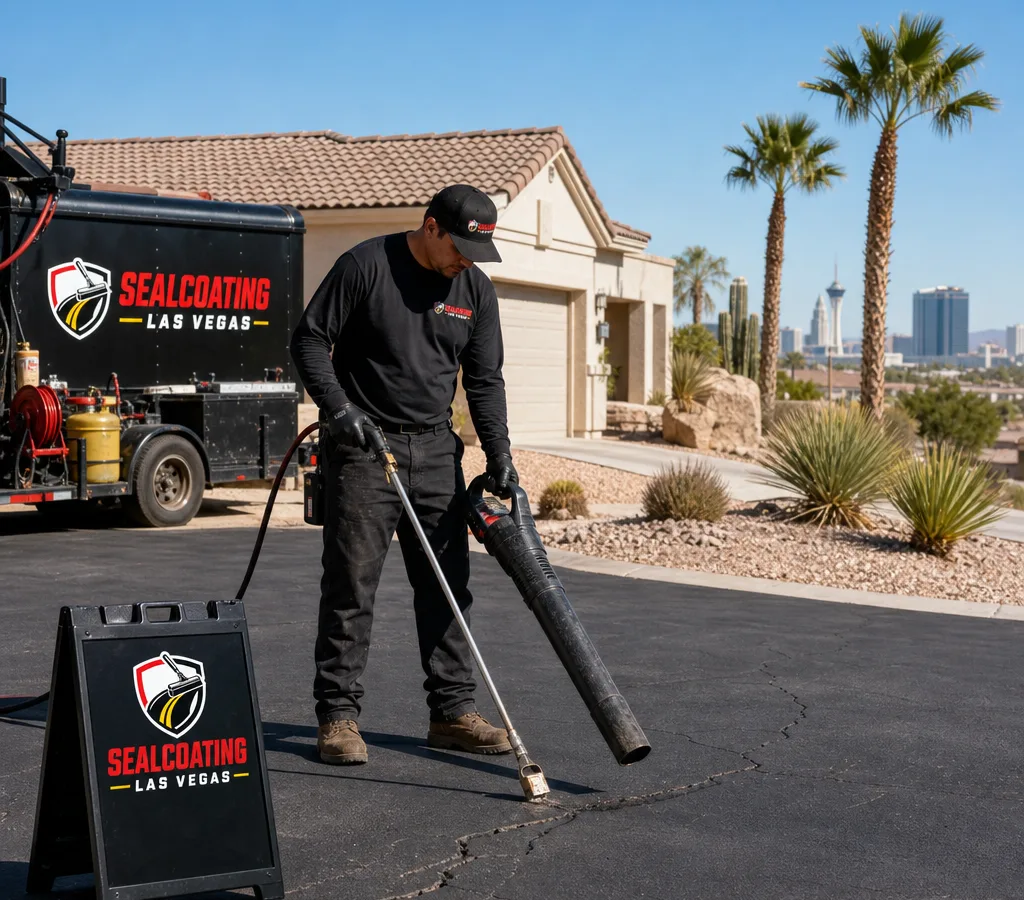
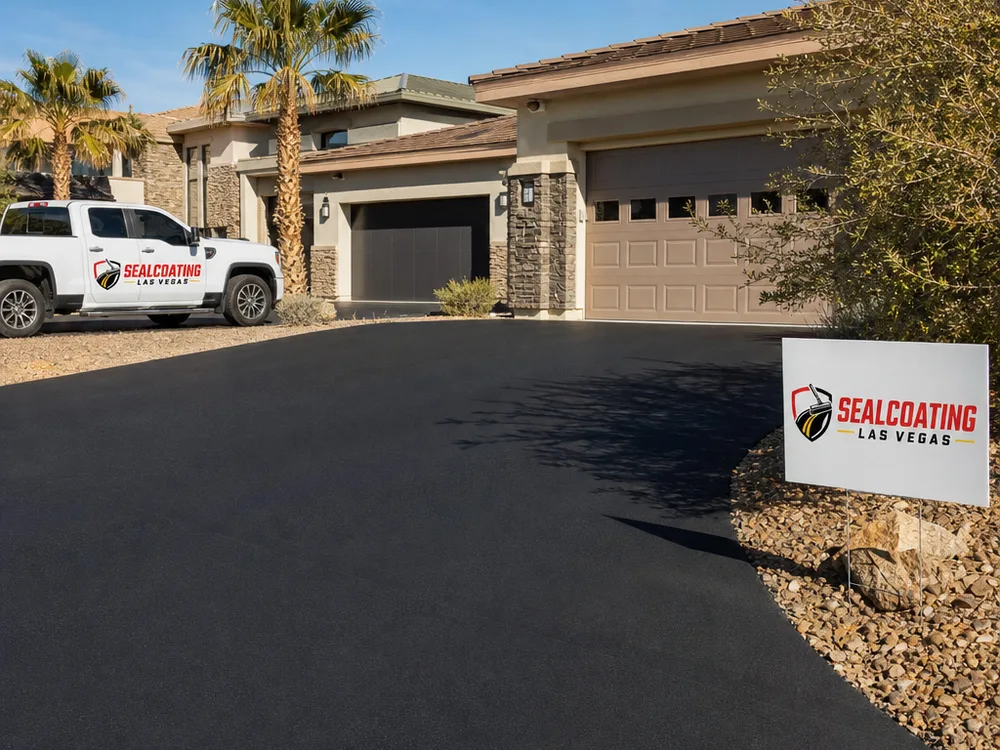
Enterprise has grown fast, and a lot of its driveways and small lots are newer pavement in genuinely good condition. Sealing sound asphalt is the cheapest pavement decision an owner ever makes, because you are protecting a surface that has not started to fail rather than trying to recover one that has. The timing question is real, though, and it goes wrong in both directions. Seal too early, while fresh asphalt is still curing and releasing its lighter oils, and the coat does not bond the way it should.
Wait too long and you have spent the surface's best years unprotected in Las Vegas sun, which is the single harshest thing acting on asphalt here. What we look for is whether the surface has cured out: how it reads underfoot, how it responds in the heat, whether oxidation has begun at all. On newer pavement the honest answer is sometimes that you should wait another season, and we would rather tell you that than take a job that gives you a worse result.
Sealcoat slows oxidation, limits moisture intrusion and keeps the surface easy to clean. It is a maintenance film, not a structural layer, and on new asphalt there is usually nothing structural to discuss, which makes these jobs straightforward.
What a first seal involves
On asphalt that is still in good condition, the scope is short and the judgement matters:
On a surface this young there is usually nothing structural to discuss, which is exactly what makes it the cheapest time to protect it.
Getting the timing right
Five things that decide when newer asphalt should get its first coat, and what goes wrong at either extreme.
Fresh asphalt releases lighter oils for a while after it is laid. A coat applied into that is working against a surface still giving off material, and the bond suffers for it.
Las Vegas sun starts working on a new surface immediately. Every unprotected summer takes some of the binder at the surface, which is the cost of waiting too long.
New-build driveways often carry mortar dust, paint drips and landscaping debris. All of it has to come off properly, and some of it needs more than a rinse.
Some young pavement develops fine cracking as it settles. It is usually minor and worth filling on the first seal rather than leaving to collect water.
New builds mean new planting, and new planting means drip lines and sprinklers often aimed badly at first. Water repeatedly hitting a driveway edge undermines it early, and it is easy to fix now.
How the work runs
We assess whether the surface has cured out enough to seal. If it has not, you get told to wait and roughly how long, with no charge for the visit.
Area, any early cracking, oil spots, and how much cleaning the surface needs. On new pavement this is a short list.
What prep is needed, how many coats, and what we are filling. Short scopes are still written down, because that is what makes the price legible.
Cleaning and any spot treatment first, crack work if there is any, then the coat. Most newer driveways here are a single-visit job.
The most useful thing we leave you with on new pavement is a realistic idea of when the next seal is due, so you are maintaining it on a cycle rather than reacting to it.
Measured on site
The argument for sealing newer asphalt is mostly an arithmetic one. Asphalt sealcoating generally runs about $0.20 to $0.45 per square foot, and most residential driveways here land around $250 to $650, with driveway sealing typically ranging from about $250 to $800 and larger multi-car driveways or small lots often $700 to $2,000+ depending on layout. A young surface sits at the bottom of whichever band it falls in, because the prep is cleaning rather than repair and there is seldom crack footage to bill.
The same driveway, left ten summers, arrives needing filling, spot treatment and sometimes edge work before a coat is worth applying, and it moves up its band accordingly. We settle the price after looking at the asphalt, which on a newer surface is usually a short assessment.
Plan around heat and cure
Once the asphalt has cured out, the scheduling considerations are the ordinary ones, and on a new-build property one of them catches people out.
What matters:
If you have just moved in and are not sure when the driveway was laid, we can usually tell from the surface. It is worth asking before booking rather than after.
If you have just taken the house on and nobody can tell you when the driveway was laid, we can usually judge it from the surface. Worth asking before booking rather than after.
On the ground
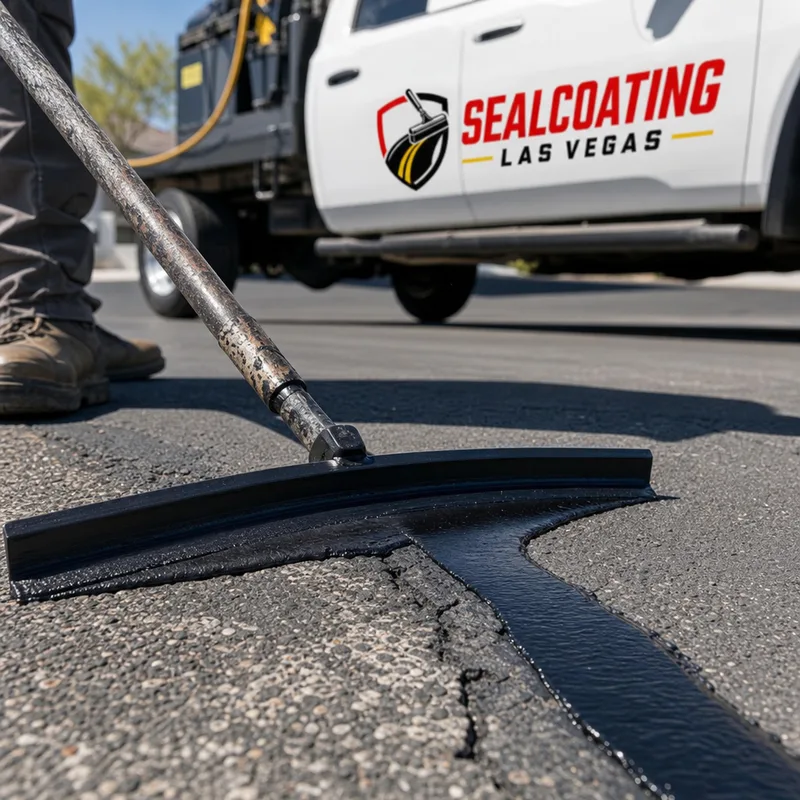
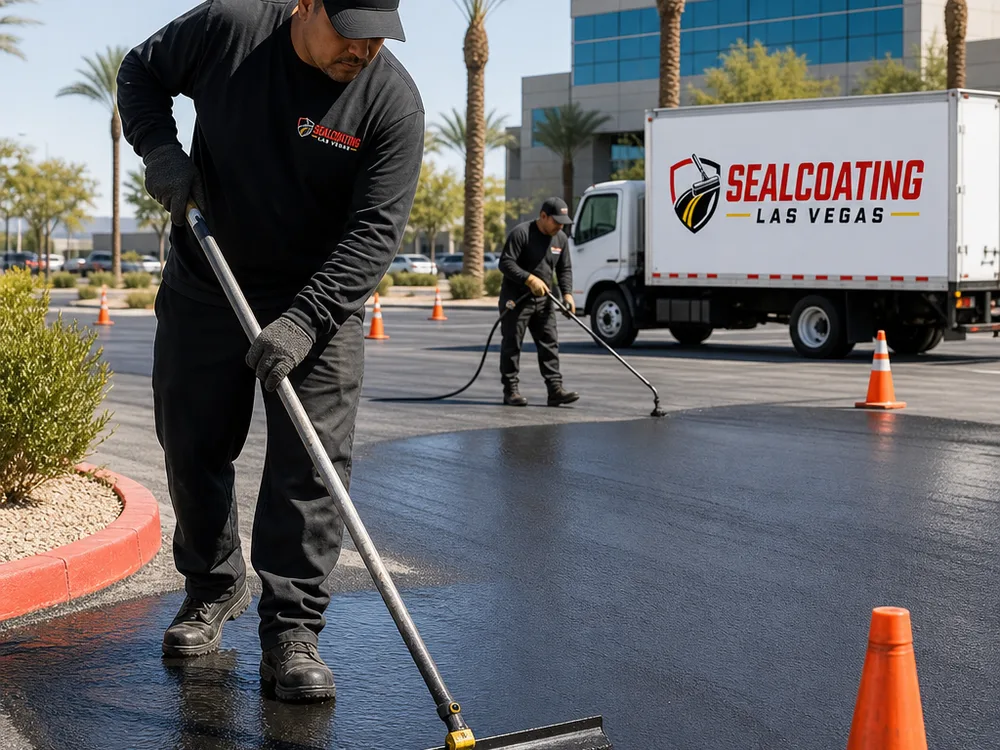
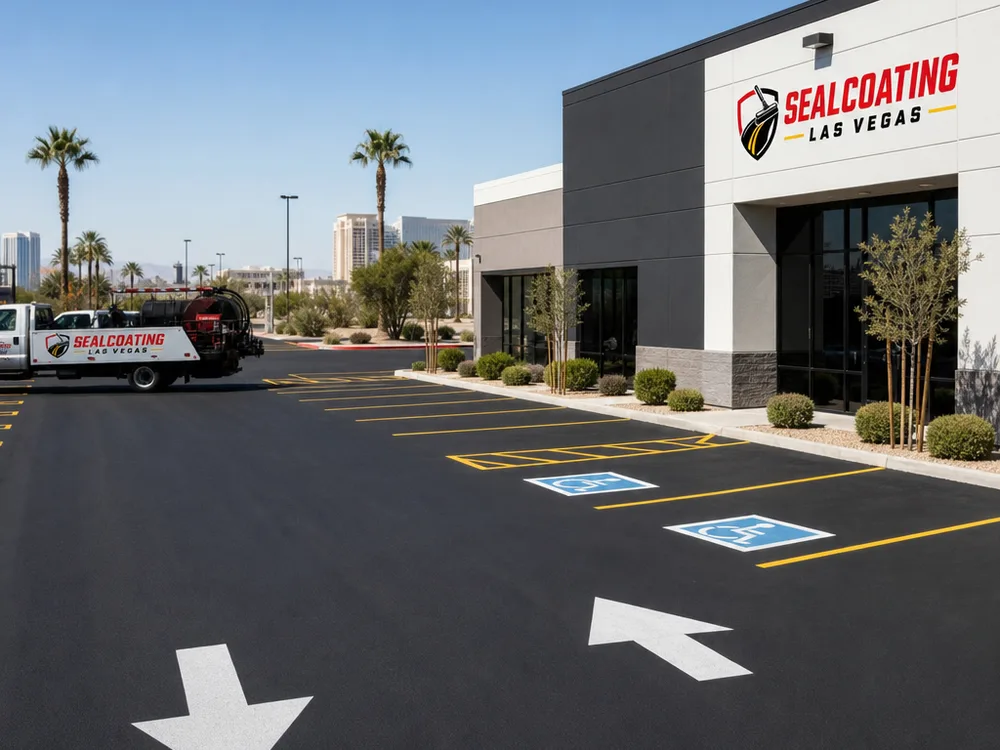
Recent driveway sealing across the Las Vegas valley, including newer surfaces given their first protective coat.
Common questions
What newer-home owners in Enterprise ask us most, mainly about when a first seal is due and whether it is worth doing at all.
Not immediately: fresh asphalt needs time to cure out and release its lighter oils before a coat will bond properly. But do not leave it for years either, because Las Vegas sun starts taking the surface binder from the first summer. We look at the actual surface and tell you whether it is ready now or should wait a season.
That is the best time to do it, and it is the cheapest pavement spend there is. You are protecting a sound surface rather than trying to recover a deteriorated one. The same driveway costs more to prepare after ten unprotected summers.
Sometimes a builder applies something, sometimes the surface is just new and dark. We can usually tell by looking at it. Worth checking rather than assuming in either direction.
Usually not. Some young asphalt shows fine shrinkage cracking as it settles, and it is normal. It is worth cleaning and filling at the first seal rather than leaving it to take water, which is a small job now and a larger one later.
Yes, and it is easy to fix while the pavement is still new. Water hitting the same spot daily keeps the base beneath the edge soft and will undermine it over a few seasons. Adjusting the head costs nothing compared with repairing the edge later.
Give it a full day before driving on it at the very least, with more time in cooler or shaded conditions. Heat helps the cure, but shaded sections and thicker applications take longer, so we give you a re-open window based on your driveway and the conditions that day.
Next step
We will look at the asphalt, tell you honestly whether it is due now or next season, and put the scope in writing if it is.
Talk to our Las Vegas team
Call or send the property address and we will arrange an on-site inspection, then put the approved work in a written scope.
Request a quote
Send the property address and what you need looked at. We reply with next steps and schedule an on-site inspection before any written scope.