
Dock and apron edges
Where a trailer sets down and pulls away, the surface takes a concentrated vertical load and then a shear. Raveling and shoving at an apron edge is a load story, not a sealer story, and it needs addressing before the coat.
Serving Las Vegas, Nevada & surrounding areas
Mon–Fri 8am–6pm · Sat 9am–2pm
Sealcoating · North Las Vegas
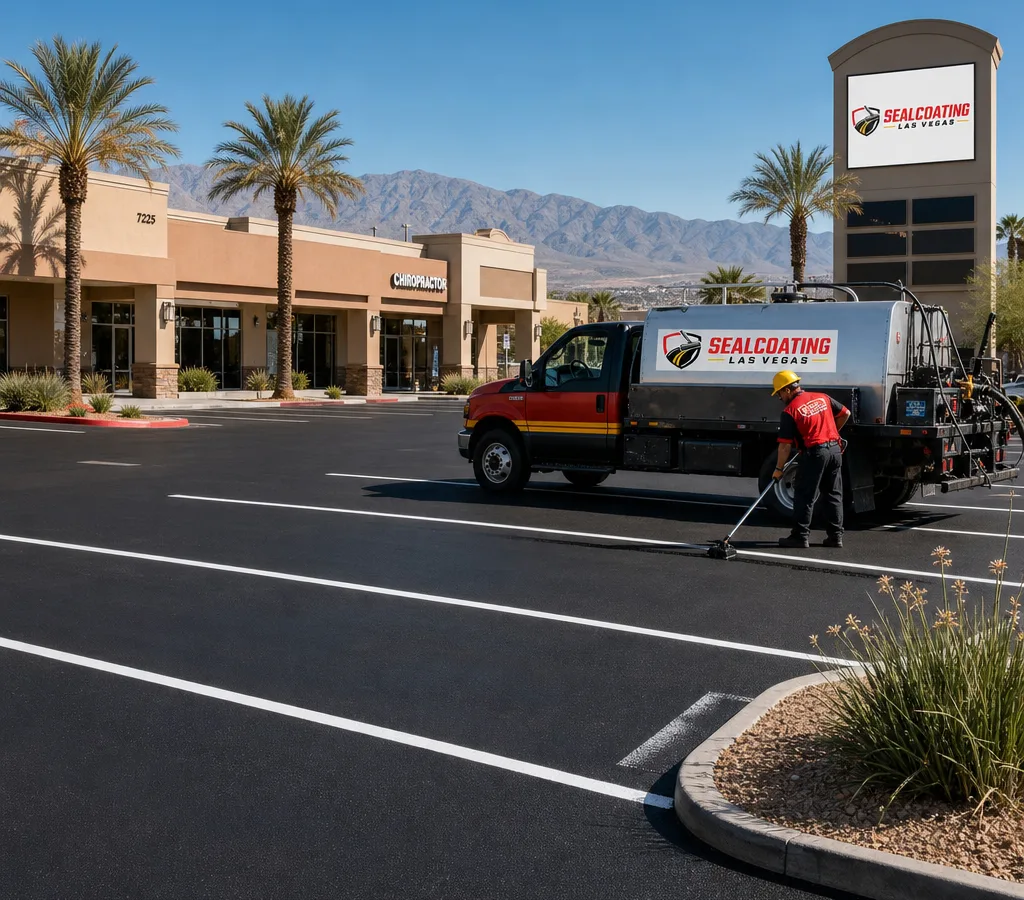
Pavement in North Las Vegas works harder than most. Where trucks, trailers and delivery vans turn and park, the surface wears in patterns a driveway never sees, and the seal plan has to account for that before anything is applied.
Built for working pavement
A surface that takes loaded axles every day ages differently from a residential driveway. The wear concentrates: at the dock apron where trailers set down, along the arc where a truck turns under power, and in the stall rows where vehicles stand still in the heat and drip. Those are the places the binder gives up first, and they are the places a seal plan has to look at before coverage rate or coat count comes into it.
Sealcoating Las Vegas works on commercial and industrial pavement across North Las Vegas as well as home driveways, and the approach is the same in principle and different in detail. Sealcoat is a protective film. It slows oxidation, limits moisture getting into the surface and gives you a uniform finish that cleans up.
It does not carry load and it does not repair a base that has started to move. On heavy-use pavement the honest conversation is usually about order of work: what needs filling or patching first, what can be sealed now, and what is going to need a structural answer later.
Order of work
What we look at on working pavement before a drop of sealer goes down:
If a turning arc or apron is already shoving or raveling under load, we will point it out and tell you what order the work should go in.
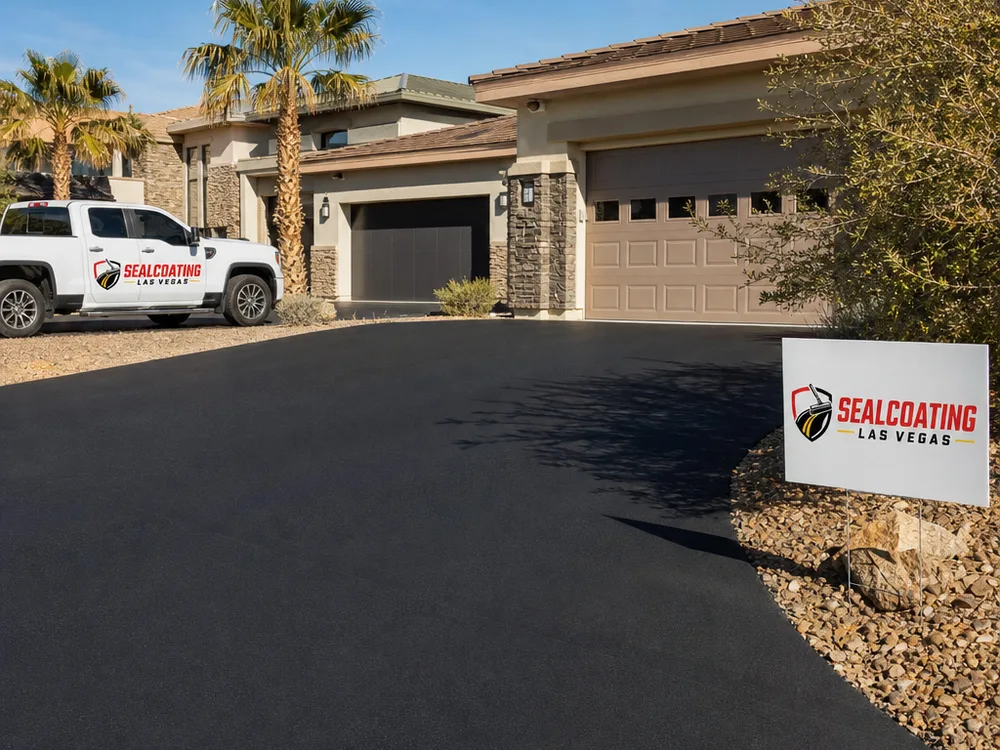
Where wear concentrates
Five wear patterns we see repeatedly on freight-loaded surfaces, and what each one tells you about the right scope.
Where a trailer sets down and pulls away, the surface takes a concentrated vertical load and then a shear. Raveling and shoving at an apron edge is a load story, not a sealer story, and it needs addressing before the coat.
A loaded truck turning under power scrubs the surface sideways. You see it as a smooth, polished curve with the aggregate exposed. Sealer restores the look and does nothing for the cause, so it is worth knowing which you are buying.
Vehicles parked in the same spot through a desert summer soften the surface under the tires and drip onto it. Those stalls often need prep the rest of the lot does not.
Water that sits finds its way in. On a large lot the low points are where you will see the first cracking that connects up into a pattern, so they are worth sealing properly and watching.
A previous repair almost never matches the surrounding surface in age or texture. The joint around it opens first, and it needs filling as a crack rather than being coated over.
How the work runs
We look at the pavement with whoever runs the place, because you know where the trucks go and when the quiet hours are. That conversation shapes the phasing more than anything we can measure.
Total area, crack footage, contaminated areas and any spots we think are structural rather than surface. You get told which is which.
Which cracks get filled, which areas get coated, how many coats, what we are deliberately not doing and why. A number with no scope behind it is not useful to either of us.
Prep, crack work, then coating, section by section, with reopening times you can plan deliveries around.
We go back over the finished work with you, including the areas we flagged as needing a structural answer later, so nothing in the report is a surprise.
Measured on site
Asphalt sealcoating in Las Vegas typically ranges from about $0.20 to $0.45 per square foot, and parking lot maintenance with basic prep typically runs about $0.20 to $0.60 per square foot. Crack sealing often adds roughly $1.00 to $3.00 per linear foot depending on crack size and routing needs. Residential driveways commonly land around $250 to $650, with larger multi-car driveways or small lots often $700 to $2,000+ depending on layout.
On freight-loaded pavement the variables that move the price are rarely square footage alone: crack footage, oil-contaminated areas needing separate prep, apron and turning-arc detail, and how much of the site has to stay open while we work. Larger commercial lots with phased closures can price line by line. Pricing is settled once we have walked the site, so the prep and coat count reflect what the pavement is actually carrying.
Plan around operations
Sealer needs a clean, dry surface and enough undisturbed time to set before anything drives on it. On a commercial site the constraint is usually not the weather, it is the delivery schedule.
The things that decide timing:
If the site genuinely cannot give up a section for a full cure window, say so early. It changes the phasing plan, and sometimes it changes which parts of the lot are worth doing this season.
If you are comparing contractors on a commercial lot, ask each of them which sections they intend to close and for how long. That answer tells you more than the per-square-foot rate does.
On the ground
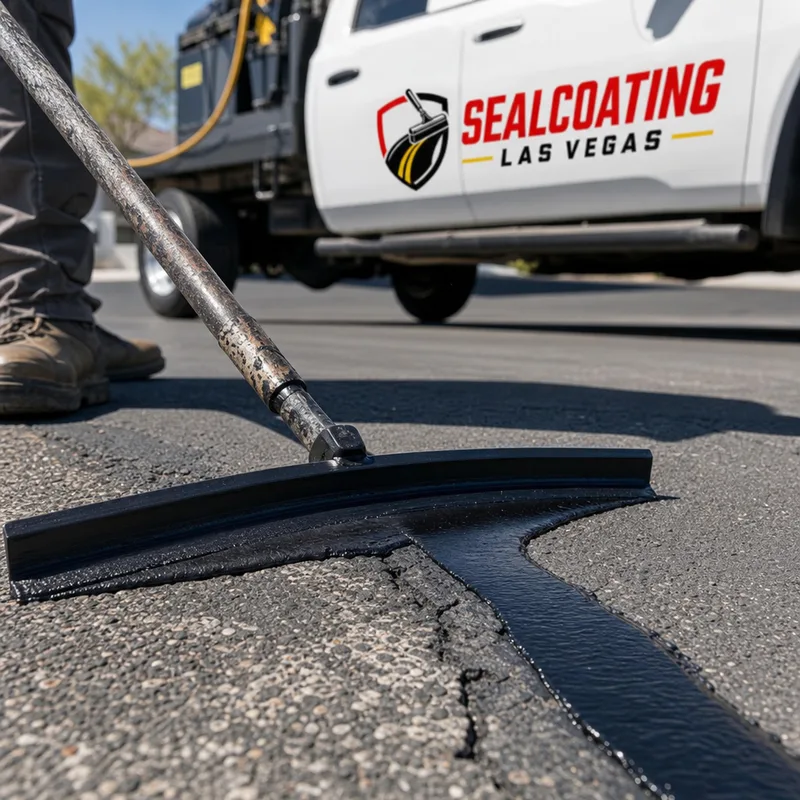
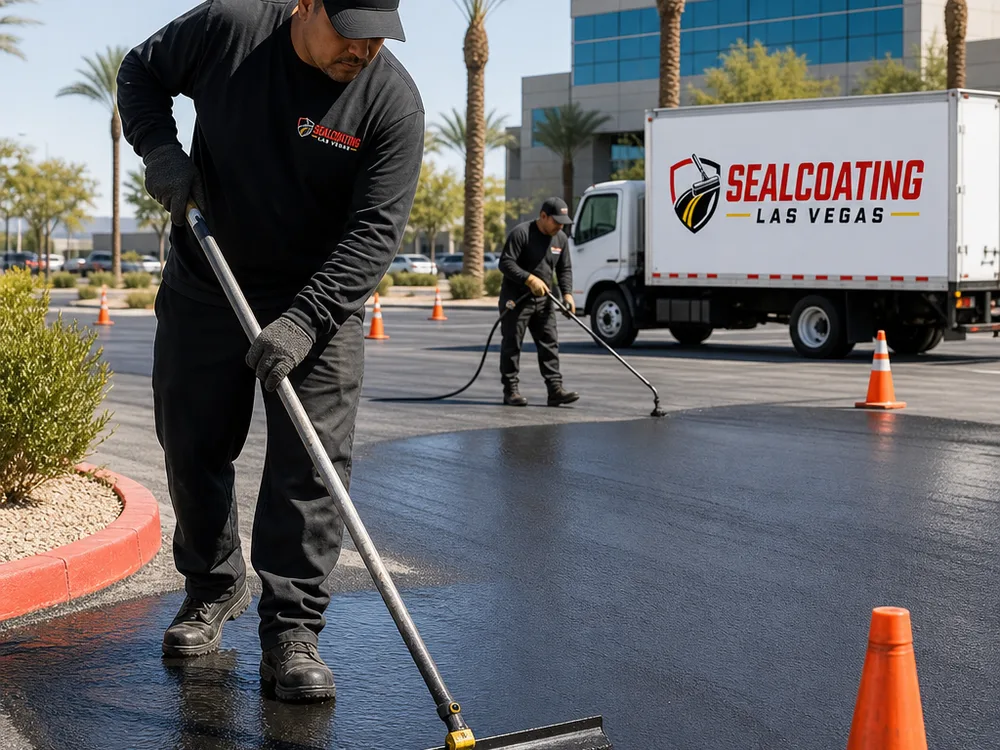
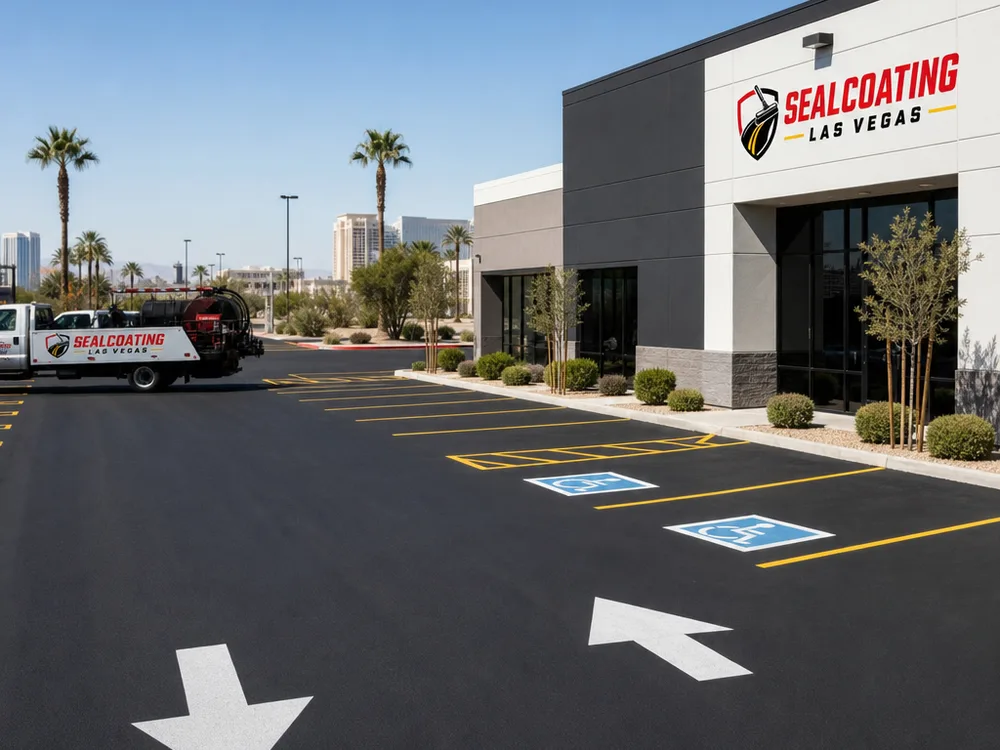
Recent sealcoating, crack filling and lot work across the Las Vegas valley, including sites carrying daily truck and trailer traffic.
Common questions
What property managers and homeowners in North Las Vegas ask us most often about scope, timing and what sealcoating can and cannot do.
Sealcoat is a protective film, so it wears where it is scrubbed hardest. On a lot carrying trucks you should expect turning arcs and dock aprons to show wear before the parking rows do. That is normal and it is worth planning for rather than being surprised by: those areas can be detailed on a shorter interval than the rest of the lot.
Usually, yes, by phasing the lot into sections with their own cure windows. We need to know your quiet hours and which positions cannot be given up at all, and we will tell you honestly if the schedule you need does not leave a workable cure window for a particular section.
No. A depression that holds its shape under load is a base or subgrade issue, and coating it changes the color and nothing else. We will point those out during the walkthrough and tell you whether they need patching, a dig-out, or just watching for now.
Yes. We seal residential driveways and commercial pavement across North Las Vegas. The equipment and phasing differ, the standard of prep does not.
Plan on a full day minimum before vehicles return, and hold heavier equipment off longer than cars. Shaded areas and thicker applications extend the window, so we give you a re-open time per section based on the actual conditions that day rather than a blanket figure.
Working cracks get cleaned and filled with a compatible filler before sealing. Sealer asked to bridge an open crack splits along that line, so skipping the crack work makes the whole job shorter-lived.
Next step
Tell us what the site does and when it is quiet, and we will walk it, measure it, and put the plan in writing before anything is scheduled.
Talk to our Las Vegas team
Call or send the property address and we will arrange an on-site inspection, then put the approved work in a written scope.
Request a quote
Send the property address and what you need looked at. We reply with next steps and schedule an on-site inspection before any written scope.